Tree removal and trimming: what a professional visit involves
By Diego Fischer · Updated 2026-08-02
Arborist-related searches are among the highest-demand terms in this niche, which tells you a lot of people are trying to understand what they’re actually paying for before they call someone. Here’s what a professional tree removal or trimming visit typically looks like.
Before the crew arrives: assessment
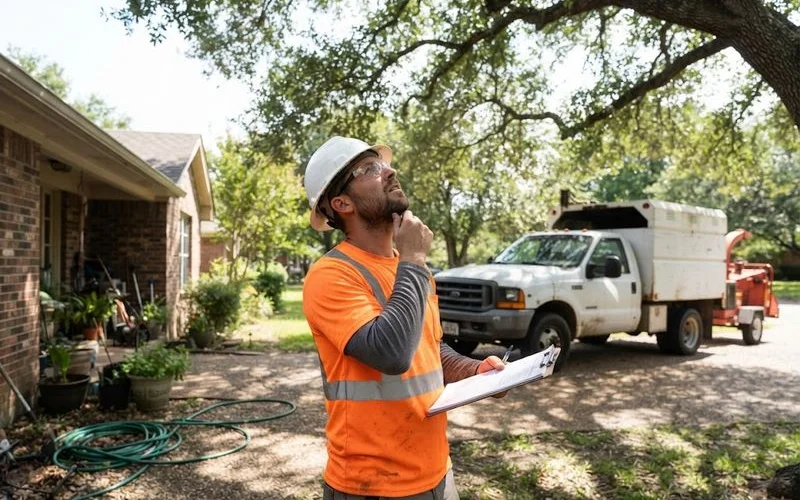
A qualified arborist or tree service should assess the tree’s condition, size, lean, proximity to structures and power lines, and access before quoting the job. This determines the equipment needed (climbing gear, a bucket truck, sometimes a crane) and whether the tree can come down in one piece or needs to be taken down in sections. Ask whether your quote includes this assessment or is a rough estimate from a photo.
Access matters more than people expect. A tree with a clear path for a bucket truck is generally cheaper and faster to remove than one in a fenced backyard reachable only by climbing, since the second scenario takes more time and specialized equipment to do safely.
What happens on removal day
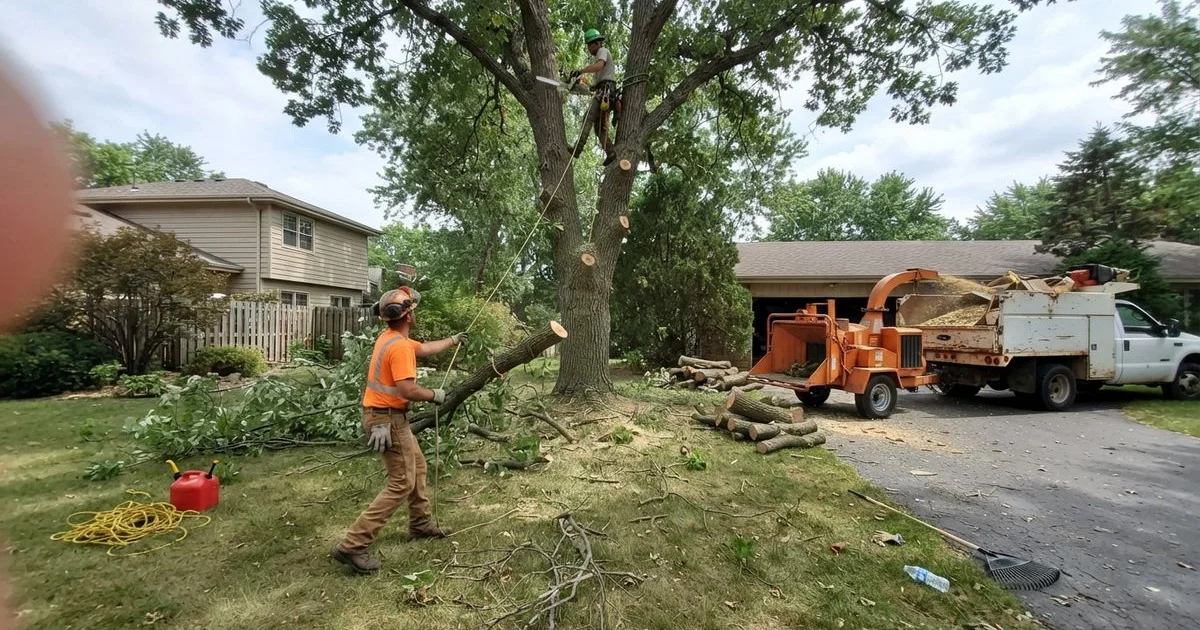
For trees with clearance, the crew may fell the tree in one piece. Closer to a house, fence, or power line, they’ll typically climb or use a bucket truck to remove the tree in sections, lowering pieces with rope to avoid damage to the property below. Expect noise, wood chips, and a crew that moves methodically rather than fast, since rushing near a structure is where accidents happen.
What trimming involves
Trimming (or pruning) removes dead, damaged, or crossing branches to improve the tree’s structure and health, and to reduce the risk of a weak limb failing in a storm. A trim visit is shorter than removal, usually climbing-based, and should leave the tree looking shaped, not stripped.
Timing matters for trimming more than most people expect. Many species are best pruned during dormancy, late fall through early spring, when the tree isn’t actively growing and disease organisms are less active. Some flowering trees are the exception, since pruning them right after they bloom protects next year’s flowers. A tree service that asks about the specific species before scheduling, rather than just booking the next available slot, is generally paying more attention to the actual health of your tree.
| Service | What it involves | Typical duration |
|---|---|---|
| Trimming/pruning | Remove dead or crossing branches, shape canopy | A few hours |
| Small tree removal | Fell in one piece, chip debris | Half a day |
| Large or close-quarters removal | Section by section with rope lowering | Full day |
| Stump grinding | Separate visit, grinds stump below grade | 1-2 hours |
Cleanup and what to expect afterward
A thorough crew chips branches on site and hauls away logs and debris, leaving the lawn reasonably clear. Reviewers across this niche consistently name thorough cleanup as one of the things that separates a good tree service from one they wouldn’t call again, so it’s a fair thing to confirm is included before the crew starts.
Wood disposal is worth clarifying too. Some crews offer to leave cut logs for firewood if you want them, while others hate the extra trip and haul everything away by default. If you’d like to keep the wood, mention it before the job starts rather than after it’s already been chipped or loaded onto a truck.
Questions worth asking before you book
Ask whether the crew carries liability insurance (tree work near a house or fence carries real risk if something goes wrong), whether the quote includes debris removal and stump grinding or those are extra, and whether a permit is needed for your specific tree. Some Ontario municipalities require a permit to remove certain trees, so it’s worth confirming before the crew shows up.
It’s also fair to ask how they’ll protect nearby landscaping, fences, or a neighbour’s yard during the job, particularly for a tree close to a shared boundary. A crew with a clear plan for rigging and rope lowering near sensitive areas is generally a better sign than one that shrugs off the question.
To compare tree service providers in your area by their track record on cleanup and communication, see the tree services category, scored with our published methodology. The Ontario landscaper directory covers every category if you’re weighing tree work against other projects.
Common questions
- How long does a typical tree removal take?
- A small to medium tree in an open yard can come down in a few hours. Larger trees, ones close to a house or power line, or trees needing a crane take longer, sometimes a full day.
- Do I need to be home during a tree removal?
- Not necessarily, but you should be reachable, and it helps to walk the site with the crew beforehand so everyone agrees on what's being removed and how debris will be handled.
- Will the crew remove the stump too?
- Only if you ask for it and it's quoted separately. Stump grinding is typically a separate line item from removal, not automatically included.
- How often should trees on a property be trimmed?
- Most healthy trees benefit from trimming every two to three years to remove dead or crossing branches and maintain structure. Trees near power lines or structures may need more frequent attention.