Warning signs a tree on your property needs to come down
By Diego Fischer · Updated 2026-07-05
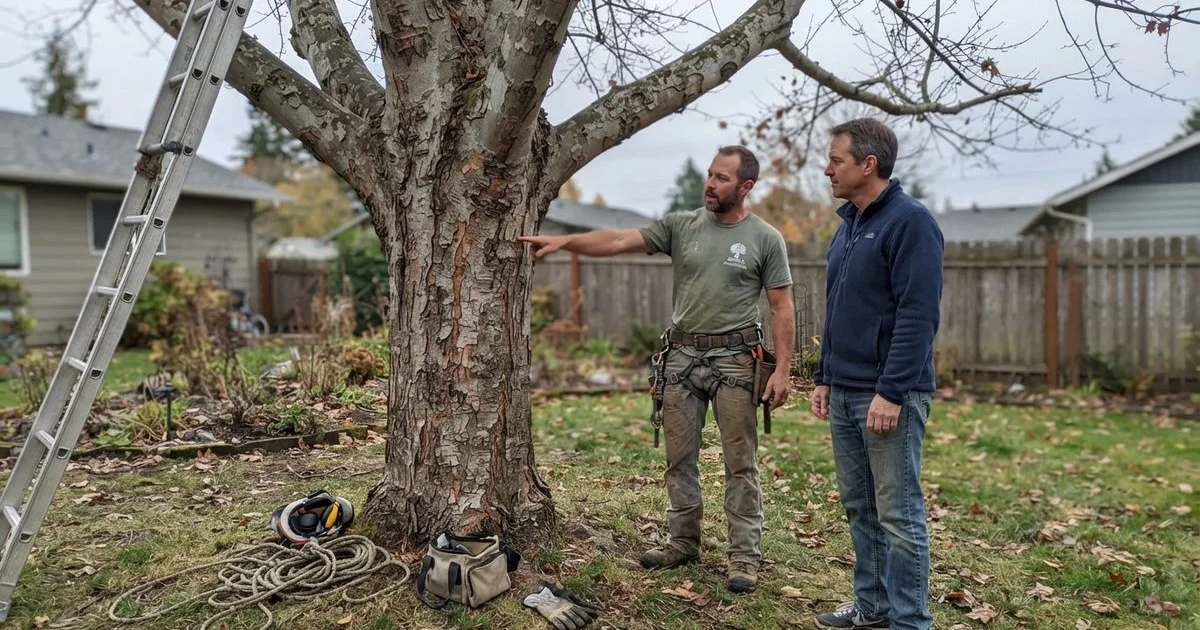
A tree that fails near a house, driveway, or walkway can cause real damage or injury, and the warning signs are often visible well before it happens if you know what to look for. This guide covers the signals worth taking seriously.
Signs in the canopy and branches
Dead branches, especially a significant portion of the upper canopy, are one of the clearer signs a tree is struggling. A healthy tree drops occasional small deadwood; a tree with large sections of bare, brittle branches while neighbouring trees are fully leafed out deserves a closer look. Cracks or splits where large branches meet the trunk are also a real concern, since that’s a common failure point in a storm.
Timing your inspection during the growing season helps, since a tree that looks fine in winter without leaves can be harder to read than the same tree in full summer canopy, when patchy or thin foliage stands out clearly against healthier neighbours.
Signs at the trunk
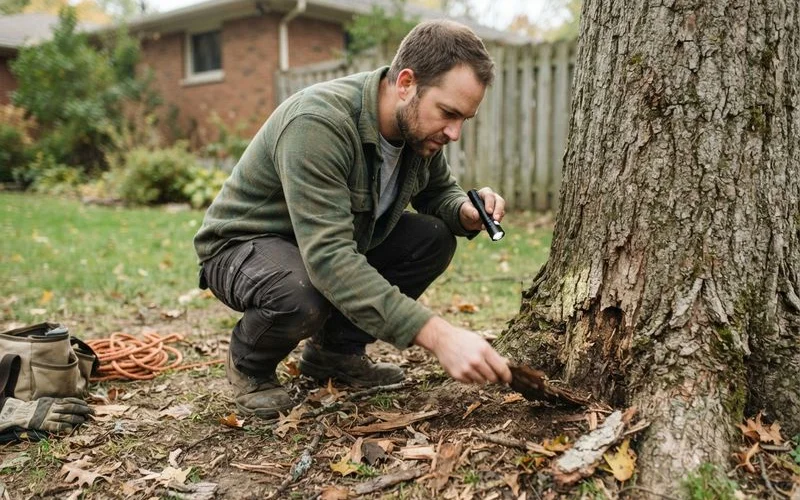
Look for large vertical cracks, sections of missing bark, or fungal growth (mushrooms or conks) on the trunk, all of which can indicate internal decay that isn’t visible from the outside otherwise. Cavities or hollow-sounding sections when tapped are worth flagging to an arborist even if the rest of the tree looks fine.
Included bark, where two large branches or trunks grow so close together that bark gets trapped in the joint instead of forming a solid connection, is another structural weak point worth knowing about. It creates a natural split point that’s more likely to fail in a storm than a properly formed branch union, and it’s often visible as a tight, V-shaped seam rather than the more rounded U-shape of a healthy join.
| Location | Warning sign | Why it matters |
|---|---|---|
| Canopy | Large sections of dead or bare branches | Signals overall tree stress or decline |
| Trunk | Cracks, missing bark, fungal growth | Can indicate internal decay |
| Base and roots | Lifted or cracked soil, exposed roots, fungus at the base | Signals a compromised root system |
| Overall structure | New or worsening lean | Especially concerning paired with root disturbance |
Signs at the base and roots
A newly appearing lean, especially one that’s worsened noticeably in a short time, combined with lifted or cracked soil on one side of the base, points to a compromised root system, which is one of the more serious hazard signals since a failing root system can bring a large tree down with little further warning. Fungal growth at the base of the trunk or over the root zone is another flag worth a professional look.
When to call an arborist
If a tree near your house, driveway, or a spot people regularly walk shows more than one of these signs, it’s worth a professional assessment rather than waiting to see what happens. An arborist can check things you can’t easily judge from the ground, sound the trunk for internal decay, and give you a clear recommendation: monitor, trim to reduce risk, or remove.
A second opinion is reasonable if a large or valuable tree is involved and the first assessment recommends removal. Tree health can be genuinely hard to judge even for experienced eyes in some cases, and a second arborist may spot something the first missed, or confirm the same conclusion with more confidence either way.
After a storm
Even a tree with no prior warning signs can be weakened by a major storm. After significant wind or ice, walk your property and look for new cracks, a fresh lean, or soil disturbance around the base before assuming everything is fine just because the tree is still standing.
If an assessment points to removal, check with your municipality first: many Ontario cities require a permit for larger trees, even hazardous ones, though most bylaws include a path for genuine safety concerns. To find an arborist to assess a tree you’re concerned about, see the tree services category, ranked using our methodology. The Ontario landscaper directory covers every other project type too.
Common questions
- Can a tree look healthy and still be dangerous?
- Yes. Internal decay, root damage, or a compromised root system can exist under a full, green canopy, which is why a lean or dead branches at the top aren't the only signs worth watching for.
- Is a leaning tree always a hazard?
- Not necessarily; some trees grow with a natural lean their whole life. A sudden new lean, or a lean paired with cracked or lifted soil at the base, is the combination that signals real risk.
- How urgently should I act if I spot warning signs?
- It depends on severity and what's nearby. A tree with clear structural risk near a house, driveway, or where people walk regularly deserves a prompt professional assessment, not a wait-and-see approach.
- Should I try to assess a large tree myself?
- You can watch for the visible signs described here, but a qualified arborist can assess things you can't easily judge from the ground, like internal decay or root health. Treat your own observation as a first flag, not a final verdict.