Irrigation system spring startup and fall shutdown, explained
By Diego Fischer · Updated 2026-06-23
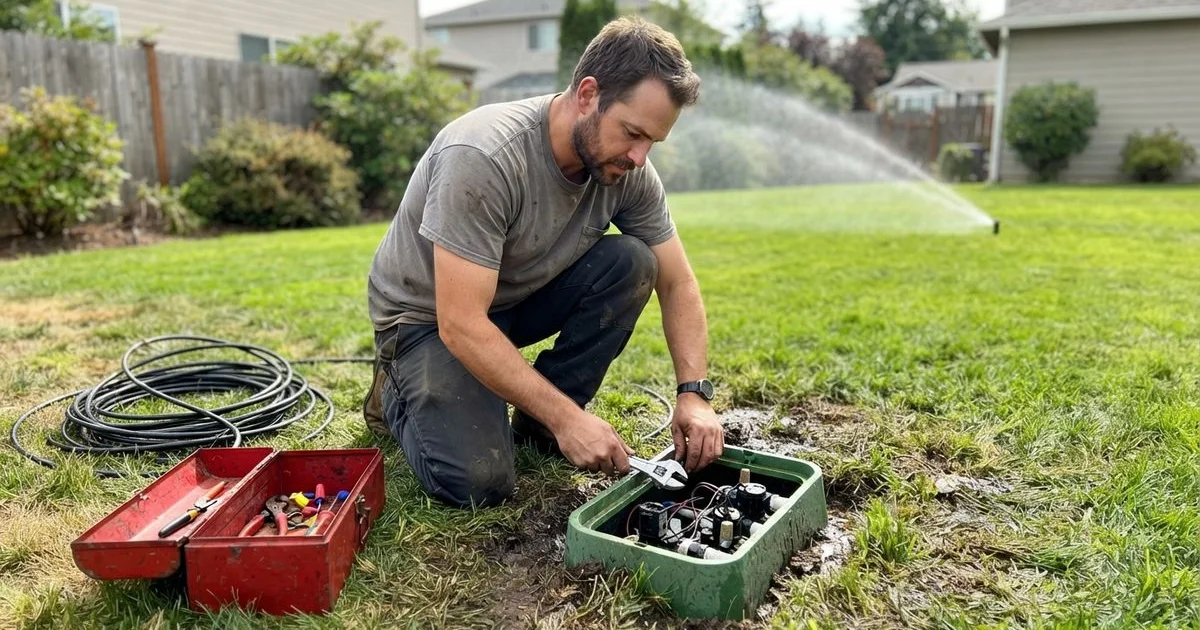
An underground irrigation system needs two service visits a year to survive an Ontario winter without damage: a spring startup and a fall shutdown. Skipping either one is one of the more common and preventable ways homeowners end up with an expensive repair bill.
Why the fall shutdown matters most
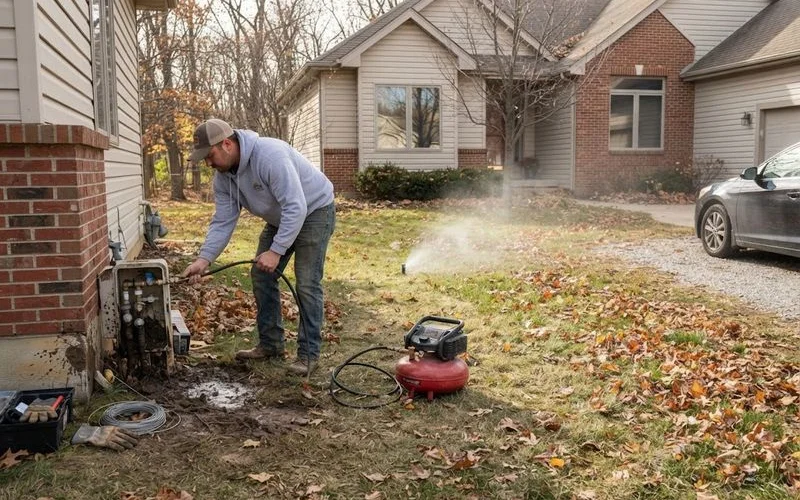
Water left sitting in underground pipes and valves freezes as temperatures drop, and ice expanding inside a pipe or fitting can crack it, sometimes in multiple places across a system. A proper shutdown uses a compressor to blow all the water out of the lines, valves, and heads before the first hard freeze, leaving nothing behind to freeze and crack. Skipping this step is the single most common cause of spring irrigation repairs.
The compressor size and blowout pressure matter too, and using the wrong equipment can itself damage a system, which is another reason this isn’t really a job for a rented shop-vac or a small home air compressor.
What a spring startup involves
In spring, a technician slowly pressurizes the system, checks each zone for leaks, and inspects sprinkler heads for winter damage (a head can crack from ground movement or get damaged by a snowblower or plow even with the system shut off). This is also when broken or misaligned heads get caught and fixed, and each zone gets checked for even coverage before the growing season starts.
Pressurizing the system slowly matters more than it sounds. Bringing water pressure up too fast can stress fittings that survived the winter fine but aren’t built for a sudden surge, occasionally causing a failure that a slower startup would have avoided. This is one of the reasons a professional startup is generally worth it over simply turning the main valve on yourself and hoping for the best.
| Visit | Timing | What it prevents |
|---|---|---|
| Fall shutdown | Before first hard freeze | Cracked pipes, valves, and fittings from frozen water |
| Spring startup | After frost risk has passed | Missed leaks, damaged heads, uneven watering all season |
What happens if you skip a season
Skipping a fall shutdown risks a cracked pipe or valve that you won’t discover until spring startup, sometimes as a slow leak that’s hard to pinpoint without professional equipment. Skipping a spring startup check means a broken head or uneven zone might go unnoticed for weeks, showing up as brown patches or a soaked corner of the lawn well into summer.
A slow underground leak is often the costliest thing to skip a season for, since it can run for weeks unnoticed, quietly driving up a water bill while also oversaturating one section of the lawn. By the time it shows up as a visibly soggy patch or an unexplained spike in your water usage, the fix is usually a call to a technician to trace and repair the specific line, which is a more involved repair than the routine startup and shutdown visits that would have caught it early.
Cost and timing
Both visits are relatively quick for a typical residential system, and many providers offer them as a package with the season’s other lawn care. Booking your fall shutdown before the first hard freeze warning, rather than waiting for a specific date, protects you against an early cold snap.
It’s one of several things worth doing before the cold sets in; see our fall yard checklist for everything else worth handling before winter.
What to ask your irrigation provider
Ask whether shutdown and startup are billed separately or bundled, whether zone checks and minor head repairs are included in the startup visit or charged extra, and how they schedule around unpredictable fall freeze timing. A provider who proactively reaches out as freeze risk approaches, rather than waiting for you to call, is generally the more reliable option.
If you’re new to a property with an existing irrigation system and don’t know its service history, a startup visit is also a reasonable time to get a full walkthrough of how many zones exist and what each one covers, since that information isn’t always obvious from a control panel alone.
To find irrigation and lighting providers in your area who offer seasonal startup and shutdown service, see the irrigation and outdoor lighting category, scored using our methodology, or browse the full Ontario landscaper directory for other services.
Common questions
- What happens if I skip the fall shutdown on my irrigation system?
- Water left in the pipes can freeze over winter and crack fittings, valves, or pipes, which turns into a repair bill once you try to start the system in spring. This is one of the more preventable and expensive mistakes homeowners make with a sprinkler system.
- How long does a spring startup or fall shutdown visit take?
- A typical residential system takes well under an hour for either service, assuming no repairs are needed. Startup can run a bit longer if the technician finds a broken head or leak that needs fixing on the spot.
- Can I do the shutdown myself without a compressor?
- Not effectively. Fully clearing water from underground lines requires a compressor to blow out the system, which is why most homeowners hire this out rather than attempt it with a garden hose or manual draining.
- How often should sprinkler heads and zones be checked?
- At minimum during the spring startup, when a technician can check each zone for coverage, leaks, and broken or misaligned heads while the system is being turned back on anyway.