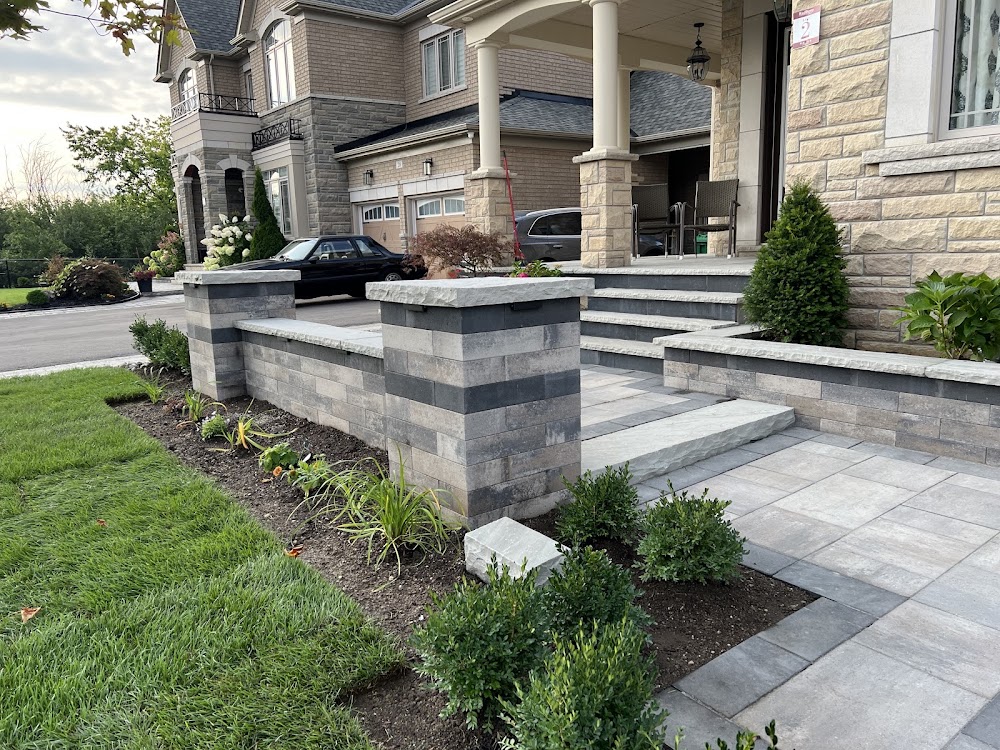
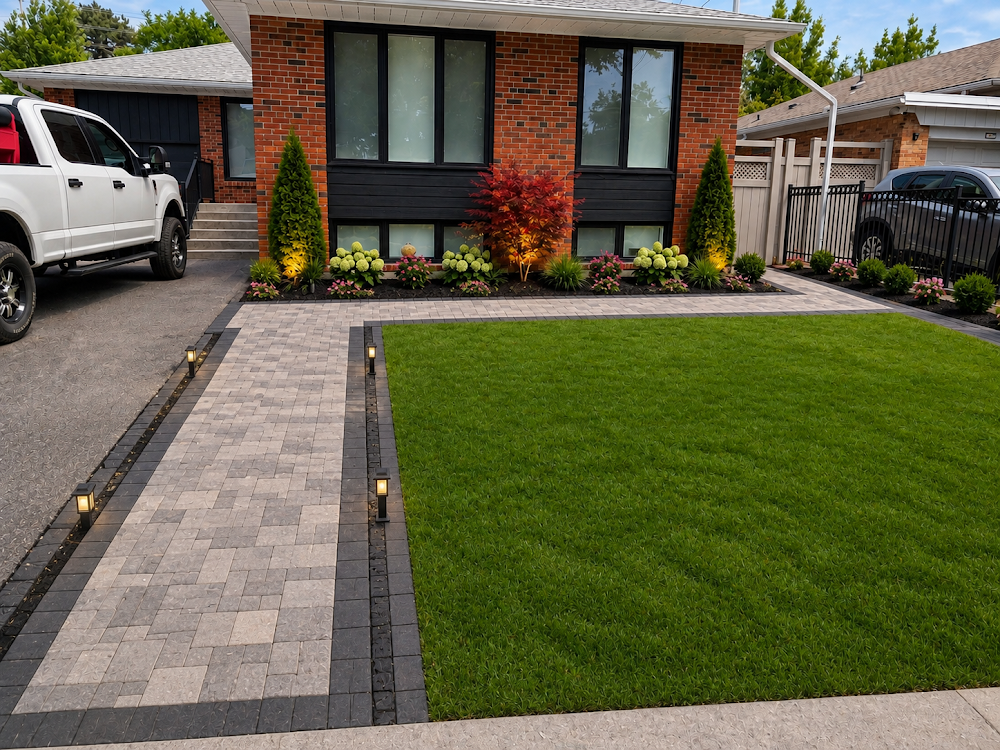
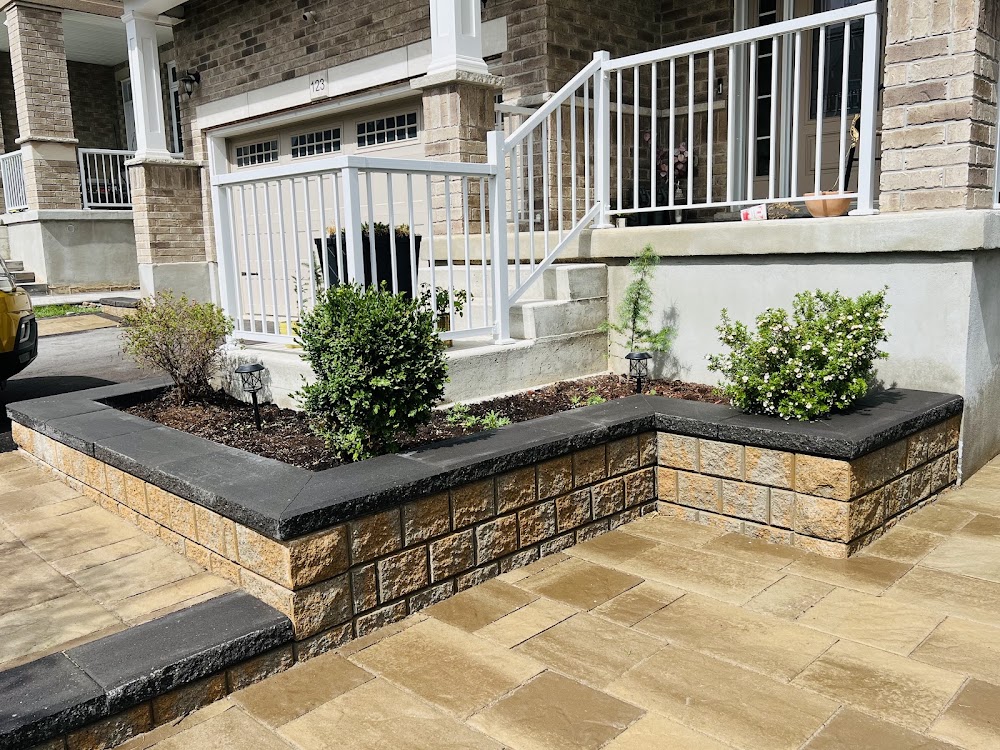
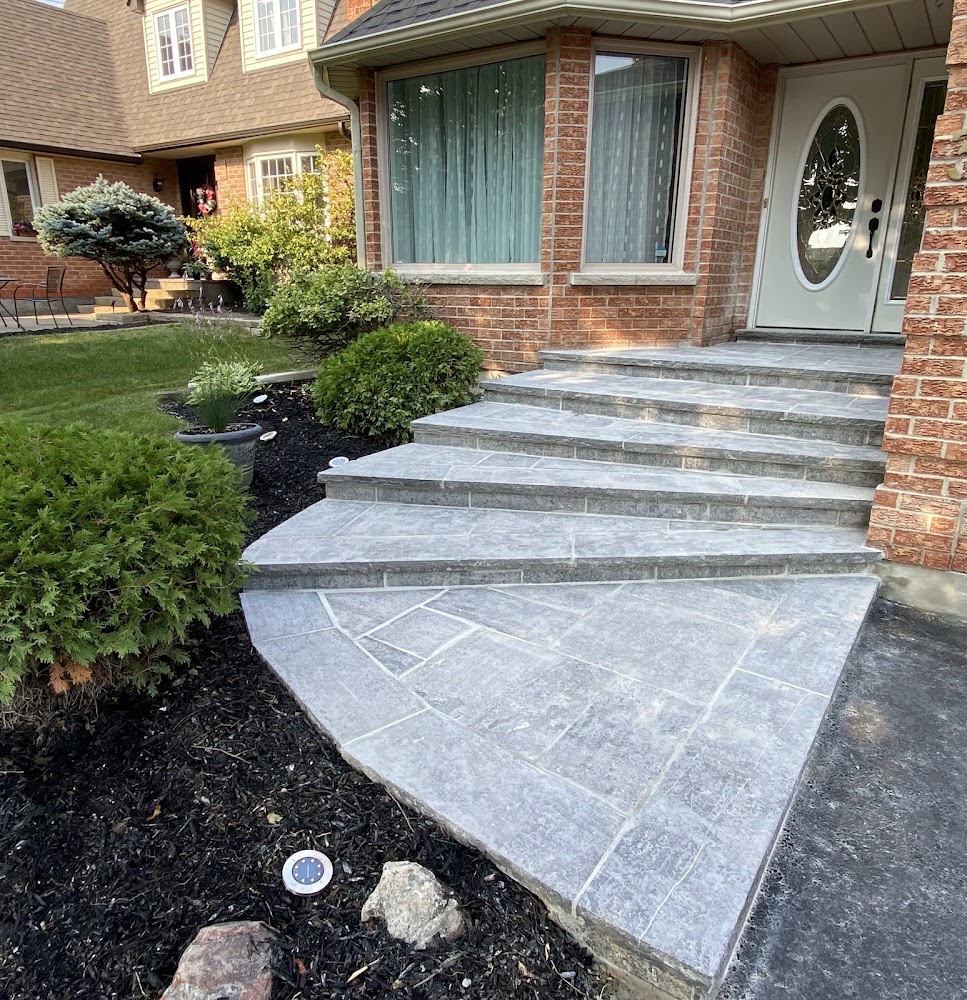
Hardscaping covers the non-plant parts of a yard: interlocking paver driveways and walkways, patios, retaining walls, steps, and sometimes outdoor kitchens or fire pits built into a paved area. In Brampton, where clay-heavy soil and freeze-thaw winters put real stress on paved surfaces, the difference between a job that lasts fifteen years and one that heaves or sinks within three usually comes down to what happens below the pavers, not the pavers themselves.
What the work actually involves
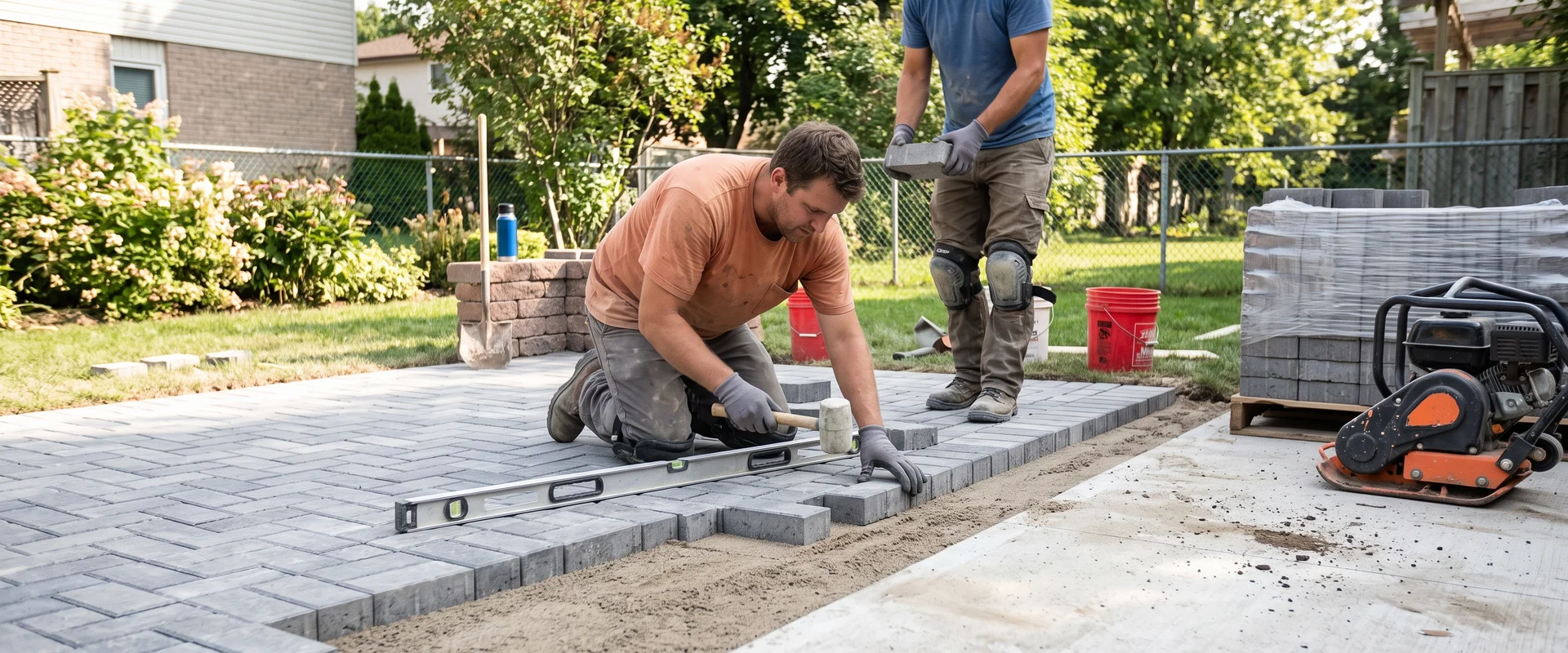
A proper interlocking job starts with excavation to the right depth, a compacted gravel base (typically 6 to 8 inches for driveways, less for walkways), bedding sand, and paver placement with polymeric sand swept into the joints. Retaining walls need their own drainage plan, gravel backfill, and geogrid reinforcement if they're holding back more than a couple feet of soil. Skipping any of these steps is invisible on installation day and expensive to fix two winters later.
What to check before you hire
- Ask what base depth and compaction method they use, and whether they test compaction rather than eyeballing it.
- Get the paver manufacturer and product line in writing so you can compare quotes on equal footing.
- Check whether the quote includes proper drainage and grading away from the house foundation.
- Ask about their approach to polymeric sand and joint stabilization, since this affects weed growth and shifting.
- Find out who handles warranty callbacks if a section settles unevenly.
Our ranked guide to Brampton hardscaping and interlocking contractors weighs how businesses actually perform on these points, based on the scoring approach explained on our methodology page, so you're not choosing on price or a homepage photo alone.